
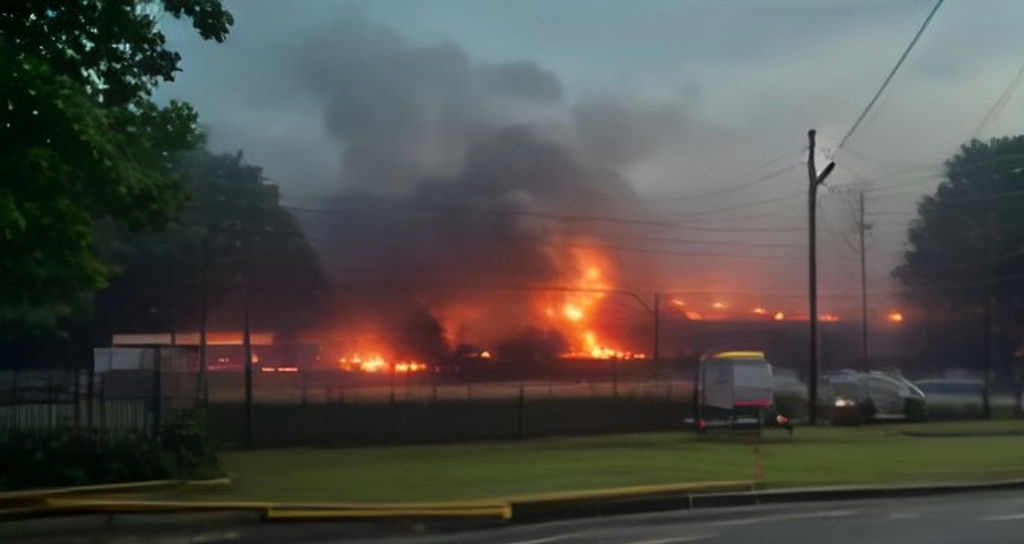
Key Takeaways
- Emergency personnel were dispatched to a reported fire at a Public Service Electric and Gas (PSE&G) substation in Cranford, New Jersey.
- Firefighters and utility crews coordinated to isolate electrical feeds and suppress localized flames without compromising broader regional grid stability.
- An investigation is underway to identify the equipment failure or underlying trigger that ignited the utility facility.
CRANFORD, N.J. — Emergency units and regional utility personnel mobilized rapidly in Union County after a fire broke out at a critical Public Service Electric and Gas (PSE&G) electrical substation in Cranford.
According to initial reporting from ABC7 New York, emergency dispatchers received distress calls alerting first responders to visible flames and heavy plumes of smoke rising from the infrastructure facility. Local firefighting battalions arrived on the perimeter quickly, securing the surrounding streets and staging hazardous materials and fire-suppression apparatus to prevent the blaze from spreading to adjacent commercial and residential structures.
Emergency Containment and High-Voltage Hazards
Incidents at electrical substations present complex, high-risk challenges for municipal fire departments. Substations step down high-voltage power distributed from generation plants into lower voltages safe for local distribution to neighborhoods and commercial corridors. Because components frequently rely on large transformers filled with combustible insulating oils, fire suppression requires meticulous coordination between utility line workers and municipal firefighters.
Cranford emergency teams worked closely with PSE&G specialists on site to confirm that specific high-voltage lines and distribution banks were de-energized prior to applying water and foam suppressants. Safely grounding equipment minimizes the acute risk of electrical arcing and protects crews battling the blaze in close proximity to massive electrical conduits.
Regional transit authorities and local law enforcement temporarily cordoned off roadways surrounding the substation compound to facilitate clear access for heavy emergency vehicles and ensure public safety while smoke drifted across neighboring streets.
Grid Stability and Power Outage Mitigation
Following the ignition, PSE&G dispatch engineers quickly examined network telemetry across Union County to evaluate system redundancies. Modern electrical distribution systems are structured with automated relays and backup distribution paths designed to re-route electric current when an individual substation unit fails or trips off the grid.
While isolated localized fluctuations were monitored by municipal dispatchers, the prompt operational response helped curb catastrophic disruptions to local hospitals, municipal water systems, and arterial transportation hubs. PSE&G technical assessment teams remain deployed to run diagnostic checks across peripheral transformers and breaker enclosures that were exposed to intense heat and soot.
Investigation and Ongoing Assessment
The precise origin of the fire remains subject to a formal inter-agency review. Investigators from the Cranford Fire Prevention Bureau and utility risk assessment units will conduct a physical inspection of the charred circuitry to determine whether an internal mechanical fault, aging insulation, an animal breach, or an environmental factor initiated the ignition.
Township leaders expressed appreciation for the rapid response of emergency personnel, noting that proactive joint training between municipal emergency responders and public utilities plays an essential role in averting potential disasters when key energy infrastructure faces unexpected operational emergencies.
Frequently Asked Questions
Did the substation fire cause widespread blackouts in Cranford?
Utility crews utilized grid redundancies to isolate affected equipment, helping avoid catastrophic widespread power interruptions. Technicians continue to monitor local feeder circuits during repair work.
What makes substation fires particularly dangerous?
Substation fires present extreme electrical shock hazards and often involve transformer cooling oils, requiring specialized non-conductive suppression techniques and rigorous coordination with utility technicians before firefighters can engage the flames.
Leave a Reply